
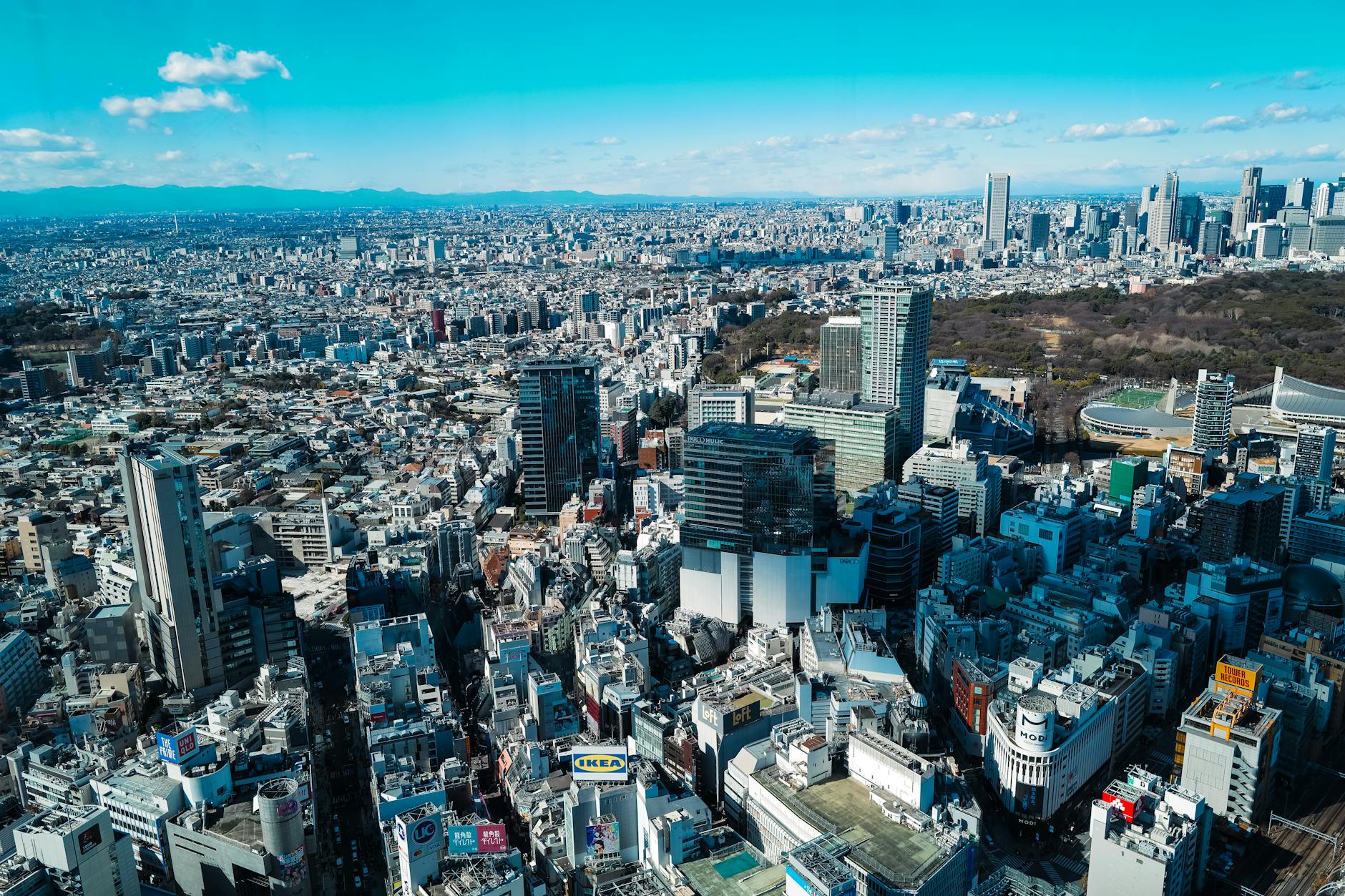
Japan has a reputation as an expensive destination. For years it was. But the yen has remained at historically low levels against the dollar and the Mexican peso, which made it one of the best value-for-money countries in Asia for Latin American travelers — as long as you know exactly where your money is going.
Most guides throw out ranges so wide they are useless: "between $50 and $300 USD per day". That does not help you plan anything concrete. This article does what others do not: it breaks down category by category with real numbers, three complete scenarios, and a clear answer on whether or not to buy the JR Pass. It also covers the tax changes that came into effect in 2026 and can blow up your budget if you do not plan for them.
A note on transparency: prices change fast. I explicitly mark estimates and tell you where to verify up-to-date data. I do not make up numbers.
The new 2026 taxes you need to know about before budgeting
🔗 Recommended · KlookBefore talking about hotels and ramen, we need to talk about what changed this year. According to Euronews Travel, the departure tax triples to 3,000 yen per person — approximately $19 USD — starting July 2026. This is verified and applies to all international travelers leaving the country after that date.
Kyoto, which already had serious overtourism problems, raised its accommodation tax. In luxury lodgings it can reach up to 10,000 yen per night. Several popular attractions also raised their entrance fees as a mechanism to control visitor flow.
The practical effect is direct: if you travel after July and your route includes Kyoto plus some paid attractions, add between 4,000 and 12,000 yen per person. It is not a trip-killing hit, but it is enough to blow up a tight budget if you did not plan for it.
The recommendation is concrete: verify the accommodation tax directly with each hotel when booking. Some already include it in the price you see on Booking or on their official site; others charge it at check-out. Spend ten minutes asking by city and category. That simple check prevents surprises at the end of the trip.
Flights: the category that varies most and that you control least
Your plane ticket is usually the largest expense and the one you control the least. From Mexico City there are no regular direct flights to Tokyo (Narita or Haneda). All routes involve a connection, mainly through Los Angeles, Dallas, Seoul, or Taipei.
Prices depend on season, lead time, and day of the week. Avoid Golden Week in May and the two weeks around Japanese New Year. A round-trip flight in mid-season, booked four to six months in advance, usually runs between $850 and $1,350 USD per person in economy. With little lead time or during high season it easily exceeds $1,600.
Do not trust generic ranges. Open Google Flights with your exact dates, turn on the price alert, and compare several airline combinations. That is the only data that actually helps you.
Accommodation: three tiers with real prices
Accommodation became more accessible thanks to the exchange rate. At the time of publishing this article it is around 150 yen per dollar. Check the current rate at themoneyconverter.com before locking in any reservation.
Here are the three real tiers per night per person in Tokyo:
| Type of accommodation | Estimated price per night (USD) | Example |
|---|---|---|
| Capsule / hostel dorm | $25 - $45 | Several options in Shinjuku and Asakusa |
| Budget / business hotel | $60 - $100 | Toyoko Inn, APA Hotel |
| Mid-range hotel with private room | $120 - $200 | International and local chains |
For seven nights, approximate totals look like this:
- Budget tier: $175 - $315 USD
- Mid tier: $420 - $700 USD
- Comfort tier: $840 - $1,400 USD
Kyoto and Osaka have similar prices in the low and mid categories, but Kyoto's tourist areas rise considerably in spring and autumn. With the new accommodation tax, a premium ryokan can add several thousand yen extra per night. Business hotels remain the best value for most travelers: clean, well-located, good wifi, and without luxuries you are not going to use.
Internal transport: the JR Pass question with real math
This is the topic that creates the most confusion. It deserves numbers, not vague opinions.
The 7-day ordinary JR Pass costs around $320 USD per person in 2026. The exact price varies by authorized reseller and exchange rate; always verify at japanrailpass.net before buying.
The key question is whether it pays off. The answer depends on two things: your exact route and whether you will take at least one long-distance Shinkansen.
Let us take the most common one-week route:
Typical route: Tokyo → Kyoto → Osaka → Tokyo
Per current JR fares:
- Tokyo to Kyoto on Shinkansen (Nozomi or Hikari): approximately 13,600 yen ($91 USD)
- Kyoto to Osaka on JR train: 560 yen ($3.70 USD)
- Osaka to Tokyo on Shinkansen: 13,600 yen ($91 USD)
Those three legs alone add up to around $186 USD. If you also use local JR trains in Tokyo, Kyoto, and Osaka for several days, the pass easily pays for itself.
JR Pass verdict: buy it if your itinerary includes at least one round trip between major cities on Shinkansen and you plan to move around a lot on JR lines. If you are staying only in Tokyo or only in Kyoto, it almost never pays off. In that case, buy individual tickets or use local metro passes.
The JR Pass does not cover most urban metro lines. Budget between $4 and $11 USD per day for local transport, depending on how much you move. Use Google Maps or the Hyperdia app to calculate exact routes and costs before leaving the hotel.
Food: the category where Japan surprises you in your favor
Food is where you can cut costs the most without sacrificing quality. A ramen at a neighborhood spot costs between 800 and 1,200 yen ($5 - $8 USD). A decent bento at a konbini (7-Eleven, FamilyMart, Lawson) runs between 500 and 800 yen ($3.30 - $5.30 USD). A sit-down meal at a no-frills restaurant is between 1,000 and 2,000 yen ($7 - $13 USD).
Real daily breakdown by travel style:
| Eating style | Estimated daily spend (USD) |
|---|---|
| Konbini + basic ramen | $15 - $25 |
| No-frills local restaurants | $30 - $50 |
| Mix with dinners at selected places | $50 - $80 |
For seven days that is between $105 and $560 USD. The real advantage is that the cheap option in Japan is still very good. Konbinis sell fresh, balanced, tasty food. Udon and takoyaki stalls and street food markets complete the picture. Eating where locals eat not only saves money — it also brings you closer to the place.

The three complete scenarios for a week in Japan
All scenarios include the new taxes under "Taxes and misc". None include the flight, which varies too much by origin city and dates.
Scenario 1: Tight budget
Capsules or hostels, food mostly from konbini, transport without JR Pass, free or low-cost attractions.
| Category | 7 days (USD estimated) |
|---|---|
| Accommodation (capsule/hostel) | $245 |
| Food | $140 |
| Local transport | $70 |
| Intercity legs (without JR Pass) | $190 |
| Entries and activities | $60 |
| Taxes and misc | $70 |
| Estimated total | $775 USD |
Scenario 2: Comfortable traveler
Business hotel, mix of konbini and restaurants, 7-day JR Pass, several paid attractions.
| Category | 7 days (USD estimated) |
|---|---|
| Accommodation (business hotel) | $560 |
| Food | $280 |
| 7-day JR Pass | $320 |
| Local transport (metro) | $70 |
| Entries and activities | $120 |
| Taxes and misc | $95 |
| Estimated total | $1,445 USD |
Scenario 3: Real comfort trip
Mid-range hotel, dinners at selected restaurants, JR Pass, experiences like a tea ceremony or guided temple visits.
| Category | 7 days (USD estimated) |
|---|---|
| Accommodation (mid-range hotel) | $1,050 |
| Food | $420 |
| 7-day JR Pass | $320 |
| Local transport | $90 |
| Entries and activities | $200 |
| Taxes and misc | $135 |
| Estimated total | $2,215 USD |
If you add an average mid-season flight of $950 USD, the complete totals per person come to approximately $1,725 USD (budget), $2,395 USD (comfortable), and $3,165 USD (real comfort).
The budget wild card: shopping
There is a category almost no one budgets for and ends up being one of the biggest: shopping. Japan is packed with excellent-quality electronics, stationery, cosmetics, snacks, clothes, and souvenirs. With the weak yen, everything feels cheap.
There is no fixed number because it depends entirely on you. But if you do not set aside a specific amount for this category before leaving, your credit card is going to surprise you on the way back. Treat it as another budget category and decide how much you are willing to spend. Many travelers end up leaving as much in Akihabara or Don Quijote as they spend on all their food for the week.
The summary you need before booking
Japan in 2026 is expensive on flights and comfortable accommodation, but it remains surprisingly accessible on food, local transport, and day-to-day experiences. The weak yen still works in favor of the Latin American traveler bringing dollars or pesos. The new taxes add a real but manageable cost if you include them from the start.
The JR Pass is worth it if your route includes at least one long Shinkansen leg and several trips on JR lines. If you are staying in a single city, skip it.
The best trip is not the most expensive or the cheapest — it is the best reasoned one.
If you want us to run the numbers for your specific route, with your dates and your travel profile, that is exactly what we do at The Plan. Talk to Osi on Telegram and we will help you with the numbers for your route.
Sources
- Euronews Travel — "Travelling to Japan in 2026: here are the new taxes and price hikes you need to know about": https://www.euronews.com/travel/2026/04/15/travelling-to-japan-in-2026-here-are-the-new-taxes-and-price-hikes-you-need-to-know-about
- Japan Rail Pass — Official updated 2026 prices: https://japanrailpass.net
- The Money Converter — Real-time USD/JPY exchange rate: https://themoneyconverter.com/usd/JPY
- Japan-guide.com — Transport fares, local taxes, and detailed budgets: https://www.japan-guide.com