
Mexico welcomes the World Cup at home for the second time in its history. That eliminates several typical costs: no intercontinental flight, no language barrier and no need to change currency. But don't assume it'll be cheap. Accommodation prices in all three host cities are already rising, and those who book late will pay double for half the quality.
This guide uses numbers available as of May 2026. Where there's verifiable data, it's presented as such. Where there are only projections, it's clearly marked. Nothing is made up.
The three Mexican venues: the basics before the numbers
🔗 Recommended · EKTA InsuranceMexico has three confirmed cities: Mexico City, Guadalajara and Monterrey. Each has a stadium, a transport system and a different price range.
Mexico City plays at Estadio Azteca, in Coyoacan. It's the only venue in the world that will host two World Cup finals. It has the country's best public transport network —metro, light rail, Metrobus— and the largest hotel offering. The problem: traffic can turn twelve kilometers into an hour and a half.
Guadalajara uses Estadio Akron, in Zapopan. The city moves well with the Light Rail and ride-sharing apps. It has a more local atmosphere, less saturated with permanent tourism, and generally more accessible prices outside peak weeks.
Monterrey competes at Estadio BBVA, in San Nicolas de los Garza. It's the venue with the best direct air connectivity from the United States and a more business-oriented profile. That translates to mid-to-high quality hotels that raise prices very aggressively when there's international demand.
Mexico City: the budget match by match
CDMX has scale. More than twenty million people in the metropolitan area means more rooms, more eateries and more transport options. That doesn't make it cheap during the World Cup, but it does make it more flexible than the other two venues.
Accommodation: we estimate prices will rise between 60% and 100% over normal season. A three-star hotel in Roma, Condesa or Doctores that normally costs between 900 and 1,400 pesos per night will run around 1,800 to 2,800 pesos on match dates. Hostels with private rooms will start from 1,200 pesos. Check Booking and Airbnb with your exact match dates: it's the only reliable way to know what's available.
Internal transport: the metro costs a flat 5 pesos. The most used route to Azteca is Line 2 to Tasqueña then light rail: ten pesos total and about forty-five minutes. Uber or DiDi from Polanco or Roma will range between 80 and 160 pesos depending on traffic.
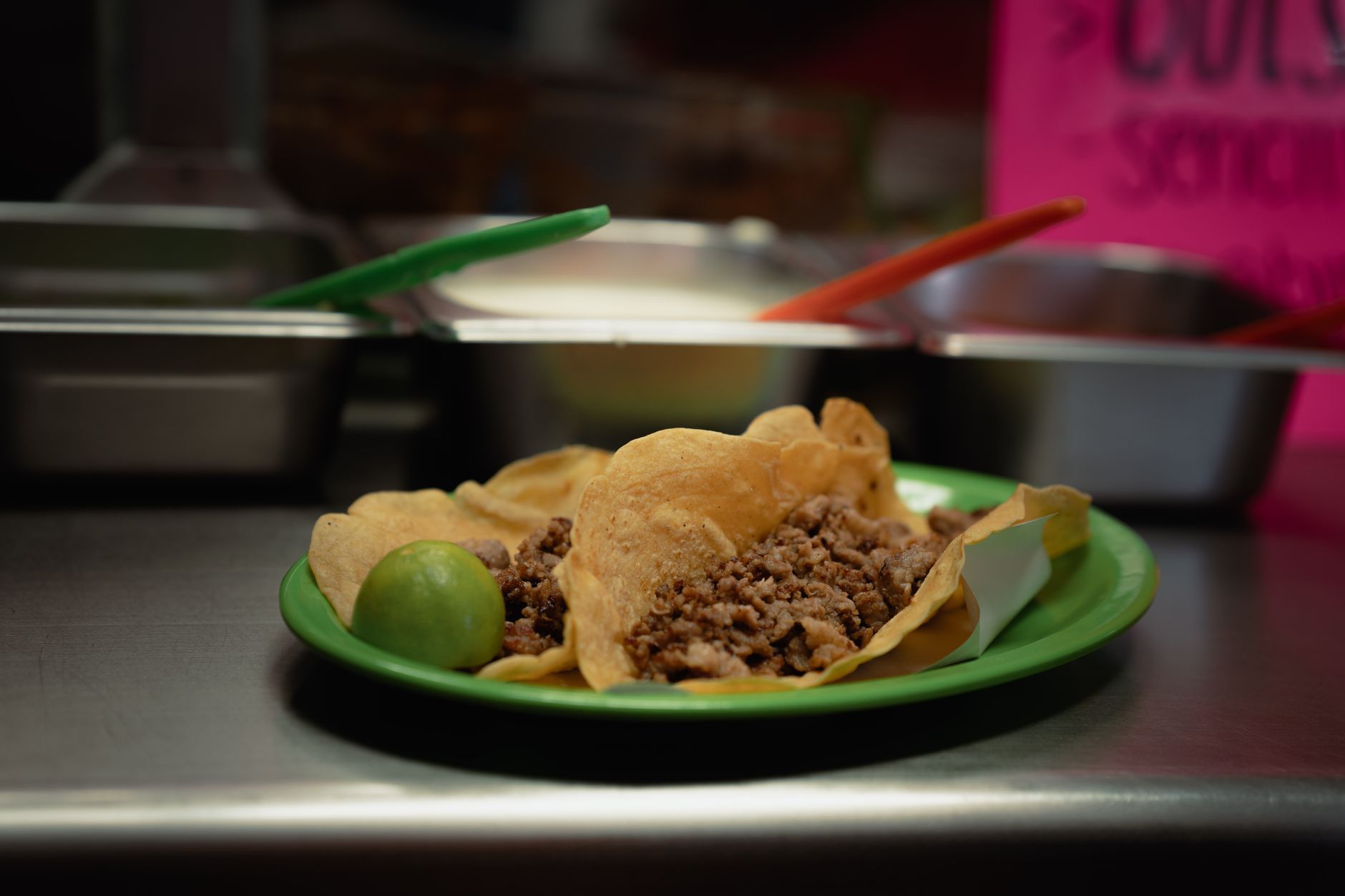
Food remains one of the city's great attractions. A basket taco or stew taco costs between 15 and 25 pesos. A full meal at a neighborhood eatery runs 80-130 pesos. At restaurants in Roma or Condesa expect 250-600 pesos per person without alcohol.
Budget scenario for four days in CDMX (two matches):
| Category | Backpacker profile | Mid-range profile | Comfortable profile |
|---|---|---|---|
| Accommodation (4 nights) | 4,800 MXN | 9,600 MXN | 18,000 MXN |
| Transport (4 days) | 400 MXN | 800 MXN | 2,000 MXN |
| Food (4 days) | 1,600 MXN | 3,200 MXN | 6,400 MXN |
| Miscellaneous | 500 MXN | 1,000 MXN | 2,000 MXN |
| Total without tickets | 7,300 MXN | 14,600 MXN | 28,400 MXN |
These amounts are based on historical high season prices adjusted for the World Cup effect. With an exchange rate of 17-18 pesos per dollar, the backpacker comes in at about 405-430 USD and the comfortable profile near 1,575-1,670 USD.

Guadalajara: the most accessible venue of the trio
Of the three Mexican venues, Guadalajara offers the best value for money for most Latin American travelers. It has less chronic tourist inflation than CDMX and less corporate pressure than Monterrey.
Accommodation: we estimate that a three-star hotel in Providencia, Chapalita or the historic center will cost between 1,400 and 2,200 pesos per night during match weeks. Complete Airbnb apartments are usually a good option for groups. The inventory is smaller than in CDMX, so book at least four months in advance.
Estadio Akron is fifteen kilometers from downtown. The Light Rail gets you close, but calculate between fifteen and twenty-five additional minutes of walking or complementary transport. Uber from downtown runs 70-130 pesos.
Eating in Guadalajara is easy and cheap. Complete lunch at market or eatery: 70-110 pesos. Mid-range restaurant in Providencia: 200-400 pesos per person.
Budget scenario for three days in Guadalajara (one or two matches):
| Category | Backpacker profile | Mid-range profile | Comfortable profile |
|---|---|---|---|
| Accommodation (3 nights) | 3,600 MXN | 6,000 MXN | 12,000 MXN |
| Transport (3 days) | 300 MXN | 600 MXN | 1,500 MXN |
| Food (3 days) | 1,050 MXN | 2,100 MXN | 4,500 MXN |
| Miscellaneous | 400 MXN | 800 MXN | 1,500 MXN |
| Total without tickets | 5,350 MXN | 9,500 MXN | 19,500 MXN |
That makes it 15% to 25% cheaper than CDMX in equivalent profiles, mainly due to accommodation and daily food costs.
Monterrey: the most expensive venue of the Mexican trio
Monterrey has the advantage of direct flights from the United States. That makes it the natural gateway for North American fans and, consequently, the venue with the highest prices.
Accommodation: we estimate that mid-range hotels in San Pedro Garza Garcia or Cumbres will cost between 2,200 and 3,500 pesos per night during the tournament. Finding options below 1,500 pesos will be difficult. Book with as much advance notice as possible.
Estadio BBVA is well connected by Line 2 of Monterrey's Metro, with a 4.50 peso fare. Even so, many visitors will prefer ride-sharing apps which, on match days, will cost between 100 and 200 pesos from downtown.
Food from Monterrey is hearty. Market or eatery: 80-140 pesos. A cut of meat at a mid-range restaurant: 350-700 pesos per person.
Budget scenario for three days in Monterrey (one or two matches):
| Category | Backpacker profile | Mid-range profile | Comfortable profile |
|---|---|---|---|
| Accommodation (3 nights) | 4,500 MXN | 8,400 MXN | 15,000 MXN |
| Transport (3 days) | 350 MXN | 700 MXN | 1,800 MXN |
| Food (3 days) | 1,200 MXN | 2,700 MXN | 5,400 MXN |
| Miscellaneous | 500 MXN | 1,000 MXN | 2,000 MXN |
| Total without tickets | 6,550 MXN | 12,800 MXN | 24,200 MXN |

How to combine two or three venues without destroying your budget
Moving between venues will be the key variable. You have three main options.
Plane: Volaris, Viva Aerobus and Aeromexico have frequent routes between all three cities. Outside match dates, a CDMX-Guadalajara can cost 600-1,200 pesos. During the World Cup, we estimate those same flights could triple. Check the airlines at least three months in advance.
First-class bus: the most price-stable option. CDMX-Guadalajara takes 6.5 hours (ETN or Primera Plus) for 500-900 pesos. CDMX-Monterrey is twelve hours. Guadalajara-Monterrey is around seven hours. Prices rise much less than air travel during mass events.
Rental car: makes sense if three or more people are traveling and you want to move outside the match zones. Check Hertz, Europcar or Kayak. Exact prices during the tournament are still difficult to pin down.
The tickets: the number that matters most and the one that's most missing
Travel and accommodation costs are only part of it. The match ticket is the heaviest variable. FIFA sells through its official platform. Historically, group stage tickets have started at 50-80 USD in basic categories, though final prices for 2026 will be confirmed over the coming months. Check directly at fifa.com.
Unofficial resale will be significantly more expensive. Official sales remain the safest path and, in most cases, the cheapest.
The reasoned decision: which venue suits you according to your profile
If you're coming from another Mexican city or Central America and looking to maximize experience with a controlled budget, choose Guadalajara. It's cheaper than Monterrey, more manageable than CDMX and has strong cultural identity.
If you're coming from the United States, Monterrey has clear logistical sense: direct flights from Houston, Dallas, Chicago and more. The higher hotel cost can be offset by savings on air transport.
If you want to see the most possible matches in a single city, or combine football with urban tourism, Mexico City remains the option with the most infrastructure and gastronomic variety.
The best trip isn't the most expensive or the cheapest — it's the most reasoned.
If you want us to run the numbers for your specific route —which city you're departing from, how many matches you want to see, at which venue— that's exactly what Osi does. Talk to Osi on Telegram and we'll help you with YOUR route numbers.
Sources
- GQ Mexico — 2026 World Cup matches in Mexico, dates and venues: https://www.gq.com.mx/articulo/mundial-2026-partidos-en-mexico-fechas-horarios-sedes
- FIFA — 2026 World Cup official information: https://www.fifa.com/es/tournaments//mens/worldcup/canadamexicousa2026/
- Infobae — 2026 World Cup coverage: https://www.infobae.com/mundial-2026/
- El Informador — Venues to watch free matches in CDMX, Monterrey and Guadalajara: https://www.informador.mx/deportes/mundial-2026-anuncian-sedes-para-ver-todos-los-partidos-del-mundial-gratis-en-cdmx-monterrey-y-guadalajara-20260516-0066.html
- AM.com.mx — CDMX guide 2026 World Cup venue: https://www.am.com.mx/superdeportivo/2026/05/17/ciudad-de-mexico-guia-de-una-de-las-capitales-del-mundial-2026-1794594.html
- Heraldo de Mexico — Where to watch free matches in Mexican venues: https://heraldodemexico.com.mx/deportes/2026/5/16/mundial-2026-donde-ver-los-partidos-gratis-en-cdmx-monterrey-guadalajara-pueblos-magicos-813699.html
- Wikipedia — 2026 FIFA World Cup: https://es.wikipedia.org/wiki/Copa_Mundial_de_F%C3%BAtbol_de_2026
- ESPN — 2026 World Cup fixture and schedule: https://www.espn.com.ar/futbol/mundial/nota/_/id/13191646/mundial-2026-fixture-calendario-fecha-horarios-y-sedes