
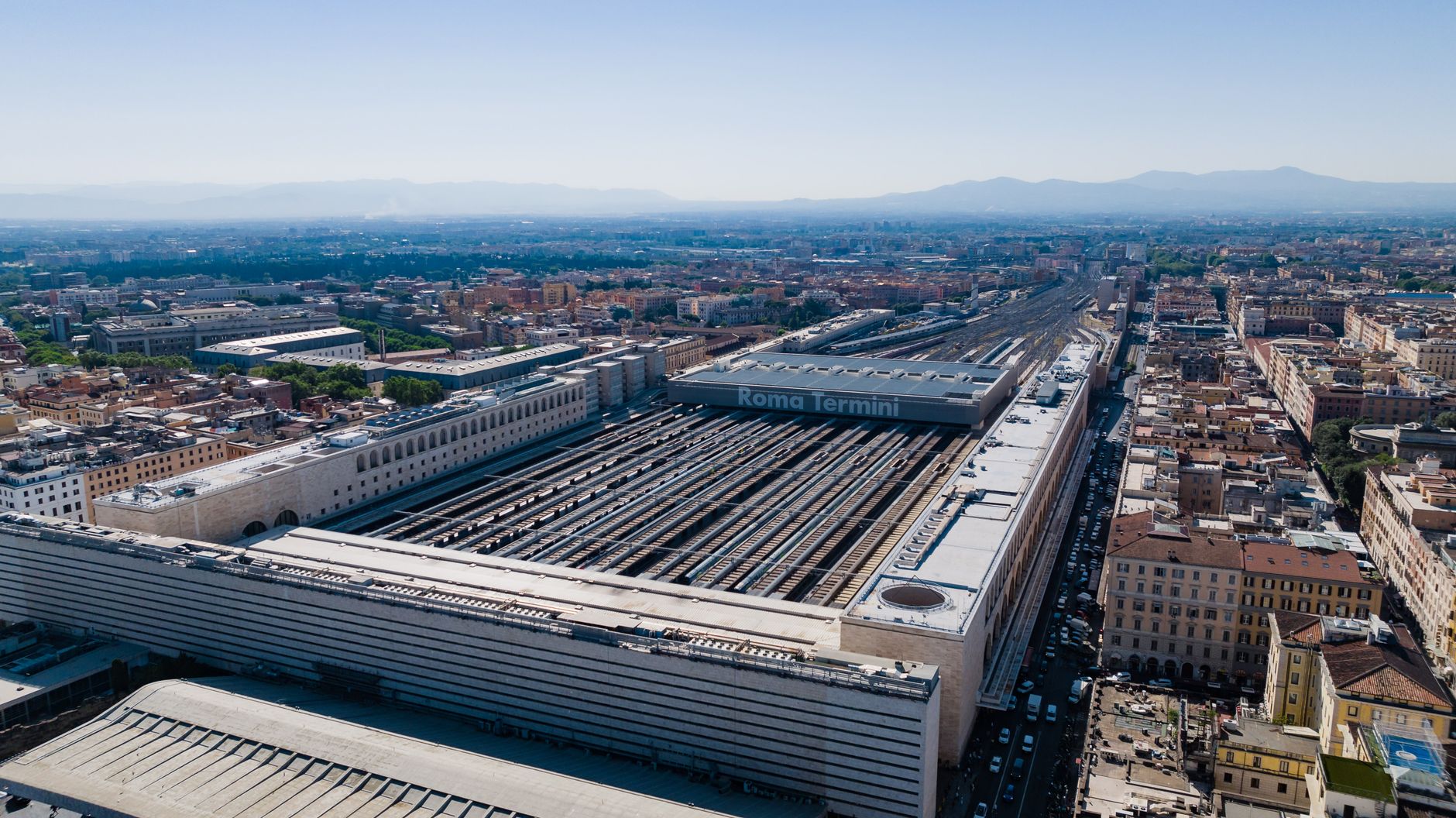
How much money do you really need for Rome, Florence and Venice in a week? The answer depends on three concrete decisions: where you sleep, where you eat, and how far in advance you buy your train tickets. These three variables move the total per person between 525 and 2,710 euros not counting the international flight. What doesn't change is the route: three world-class cities connected by high-speed trains that depart every hour.
This article breaks down the real numbers for the circuit: transport, lodging, food and attractions across three traveler profiles. Where the data comes from official sources I present it as fact. The rest is marked as estimates based on prices observed in mid-season.
The route and why trains beat planes
🔗 Recommended · TiqetsThe classic itinerary works best like this: three nights in Rome, two in Florence and two in Venice. You can reverse it, but arriving in Rome first is usually cheaper from Latin America. The stations are right downtown: you get off the train and you're steps from your hotel or the main monuments.
That's precisely why trains beat planes on this circuit. No distant airports, no two-hour security checks, no expensive transfers. You board with your suitcase and in ninety minutes you're in another city.
The actual travel times are:
- Rome → Florence: 1h 30min
- Florence → Venice: 2h 15min
- Rome → Venice direct: 3h 45min
Frecciarossa and Italo prices change dramatically based on how far ahead you book. A Rome-Florence in standard class can cost 19 EUR if you buy it sixty to ninety days in advance. The same last-minute ticket easily reaches 70-90 EUR. Florence-Venice starts at 29 EUR when booked ahead and goes up to over 80 EUR at the station.
The math is simple: book ahead or pay double. In June-September promotional fares sell out weeks in advance. If your date is fixed, buy now.
For this circuit, individual tickets bought with time usually cost less than a Eurail Pass. We already analyzed this with numbers in our article about passes versus individual tickets for 2026.
Recommended day distribution
Seven days give you little margin. This distribution respects the real weight of each city:
| Day | City | Main activity |
|---|---|---|
| 1 | Rome | Arrival, Trastevere area, getting oriented |
| 2 | Rome | Colosseum, Roman Forum, Palatine |
| 3 | Rome → Florence | Vatican in the morning, train at midday |
| 4 | Florence | Uffizi, Ponte Vecchio, Piazzale Michelangelo |
| 5 | Florence → Venice | Free morning, train in the afternoon |
| 6 | Venice | Vaporetto, San Marco, Rialto |
| 7 | Venice | Islands (Murano/Burano) or departure flight |
Rome gets more days because its sites are spread out and internal distances matter. Florence is compact: one intense day is enough if you arrive with tickets already reserved. Venice rewards early mornings, before the cruise ship groups arrive.
This table isn't rigid. If you have extra energy in Florence, you can add an afternoon at the Boboli Gardens. The point is not to waste the transfers.
Warnings you can't ignore
Three issues that directly affect your wallet and your experience.
ETIAS 2026. Citizens of Mexico, Colombia, Argentina, Peru and most of Latin America will need this electronic authorization before traveling. Implementation dates have changed several times. Check the current status on the European Commission's official site.
Venice tourist tax. The municipality charges an access fee on high-traffic days. According to municipal data, it's around 5 EUR per person in high season. Check the exact calendar at veneziaunica.it because it changes every year and the fines are real.
Required reservations. The Colosseum, Vatican Museums and Uffizi Gallery can no longer be visited without a timed ticket. Booking a month ahead is the difference between getting in in fifteen minutes or losing three hours in line. Do it from home.
The three budget profiles
All numbers are in euros per person, calculated for couple travel, and correspond to mid-season. In July and August add 20 to 30% extra, especially in Venice.
Budget profile: the traveler who prioritizes experiences over comfort
Hostels, markets and maximum advance planning for everything.
Train transport (Rome-Florence + Florence-Venice): 50-80 EUR buying sixty or more days in advance at promotional rates.
Lodging (six nights): 25-45 EUR per night in budget private room or dorm. Total: 150-270 EUR.
Food (seven days): Cappuccino and cornetto (2-3 EUR), market lunch (8-12 EUR), simple trattoria dinner (15-20 EUR). Total: 175-245 EUR.
Main attractions: Colosseum and Roman Forum (16 EUR), Vatican Museums (20 EUR), Uffizi (20 EUR), 24h vaporetto pass (25 EUR). Total: 80-100 EUR.
Local transport and miscellaneous: 10-15 EUR per day. Total: 70-105 EUR.
Total estimated budget profile: 525-800 EUR per person (not counting international flight).
With this budget you eat authentically, sleep clean and see everything essential. You just need discipline with train purchases and attraction reservations.
Mid-range profile: the traveler who wants comfort without overpaying
Well-located three-star hotel, normal restaurants and some flexibility.
Train transport: 80-130 EUR buying three or four weeks in advance in standard class.
Lodging (six nights): 80-130 EUR per double room (40-65 EUR per person). Total: 240-390 EUR.
Food (seven days): Hotel or bar breakfast (5-8 EUR), lunch (15-20 EUR), dinner with wine (25-40 EUR). Total: 315-476 EUR.
Attractions and tours: Main entries plus some guided tour or audio guide. Total: 150-200 EUR.
Local transport and miscellaneous: 20-25 EUR per day. Total: 140-175 EUR.
Total estimated mid-range profile: 925-1,371 EUR per person (not counting international flight).
Here you have room for an aperitivo with a view or artisanal gelato without the budget getting out of control.
Premium profile: the traveler who wants the best without giving up smart planning
Boutique hotel, Business class on trains and guided experiences.
Train transport: 100-180 EUR in Business or Executive class for both journeys.
Lodging (six nights): 150-280 EUR per double room (75-140 EUR per person). Total: 450-840 EUR.
Food (seven days): Hotel breakfasts and dinners with gastronomic experiences. Total: 560-910 EUR.
Attractions and private tours: 300-500 EUR with priority access and exclusive guides.
Local transport and miscellaneous: 30-40 EUR per day. Total: 210-280 EUR.
Total estimated premium profile: 1,620-2,710 EUR per person (not counting international flight).
At this level you're paying for time saved and moments that don't repeat easily.
Summary table: the three profiles at a glance
| Category | Budget | Mid-range | Premium |
|---|---|---|---|
| Trains (2 journeys) | 50-80 EUR | 80-130 EUR | 100-180 EUR |
| Lodging (6 nights) | 150-270 EUR | 240-390 EUR | 450-840 EUR |
| Food (7 days) | 175-245 EUR | 315-476 EUR | 560-910 EUR |
| Attractions | 80-100 EUR | 150-200 EUR | 300-500 EUR |
| Local + miscellaneous | 70-105 EUR | 140-175 EUR | 210-280 EUR |
| Total per person | 525-800 EUR | 925-1,371 EUR | 1,620-2,710 EUR |
All ranges correspond to mid-season (May, September-October). July and August notably raise lodging and food prices.

Where money hides (and how not to waste it)
Most travelers lose money in three predictable places.
First, restaurants stuck to monuments. The same pasta dish costs double next to the Colosseum versus three blocks away. If the menu has photos and is in four languages, keep walking.
Second, water taxis in Venice. A short ride can cost 70 to 100 EUR. The vaporetto does the same route for less than 10 EUR. Buy the 24 or 48-hour pass based on your plan.
Third, impulse purchases of water, snacks and souvenirs in tourist areas. A nearby supermarket usually charges a third of the price. Trains don't charge for luggage, but travel light: it makes walking transfers from stations easier.
The right time to travel
September is the ideal window for this circuit. Heat drops, lines get shorter and lodging prices fall 15 to 25% compared to August. May also works very well: long days and less saturation.
July and August in Venice are another category: over 35°C with humidity, maximum prices and crowds that change the experience. If you can only travel in August, go with a budget 25 to 30% higher and adjusted expectations. It's still worth it, just feels different.
What the numbers don't say
This circuit has a quality that no table captures: human scale. Florence can be crossed on foot in twenty minutes. Venice has no cars. Rome has entire neighborhoods where everyday Italian life continues at its own pace despite tourism.
It's those details that stick: an espresso standing at a locals' bar, sunset from Piazzale Michelangelo before the groups arrive, or getting lost for half an hour on a Venice street without a single organized tour in sight.
The best trip isn't the most expensive or the cheapest—it's the best reasoned.
Ready to plan your trip? Talk to Osi on Telegram and we'll help you with the numbers for YOUR route.
Sources
- Trenitalia — trenitalia.com (high-speed train prices and schedules)
- Italo — italotreno.it (fares and availability)
- European Commission — travel.ec.europa.eu (ETIAS information)
- Municipality of Venice — veneziaunica.it (tourist access tax)
- Colosseum — coopculture.it (Colosseum and Roman Forum reservations and fares)
- Vatican Museums — museivaticani.va (reservations and fares)
- Uffizi Gallery — uffizi.it (reservations and fares)