

December and January are the months when most Mexicans, Americans, and Latin Americans go looking for warm beaches. They're also the months when Caribbean prices climb 25% to 40% above low season, based on tourism industry patterns that repeat year after year.
Before you book, the real question isn't "which one is prettier?" All three destinations have spectacular beaches. The question that matters is which one gives you more for your money based on where you're leaving from, how you travel, and what kind of experience you're after.
This comparison breaks down flights, lodging, transfers, and activities with explicit math for three different points of origin. We'll give you the full structure, the real proportions, and practical scenarios so you can update the numbers with the rates you find today.
An important note: prices fluctuate week to week. We don't have a verified database with exact airline and hotel rates for the 2026-2027 winter high season. What we do give you is a solid calculation framework: proportions, the components that dominate, and scenarios by profile, so you can apply it to the actual prices of the moment. If you want to run the numbers against your specific dates, message Osi on Telegram and we'll work it out together.
The Three Destinations, Three Different Vacation Models
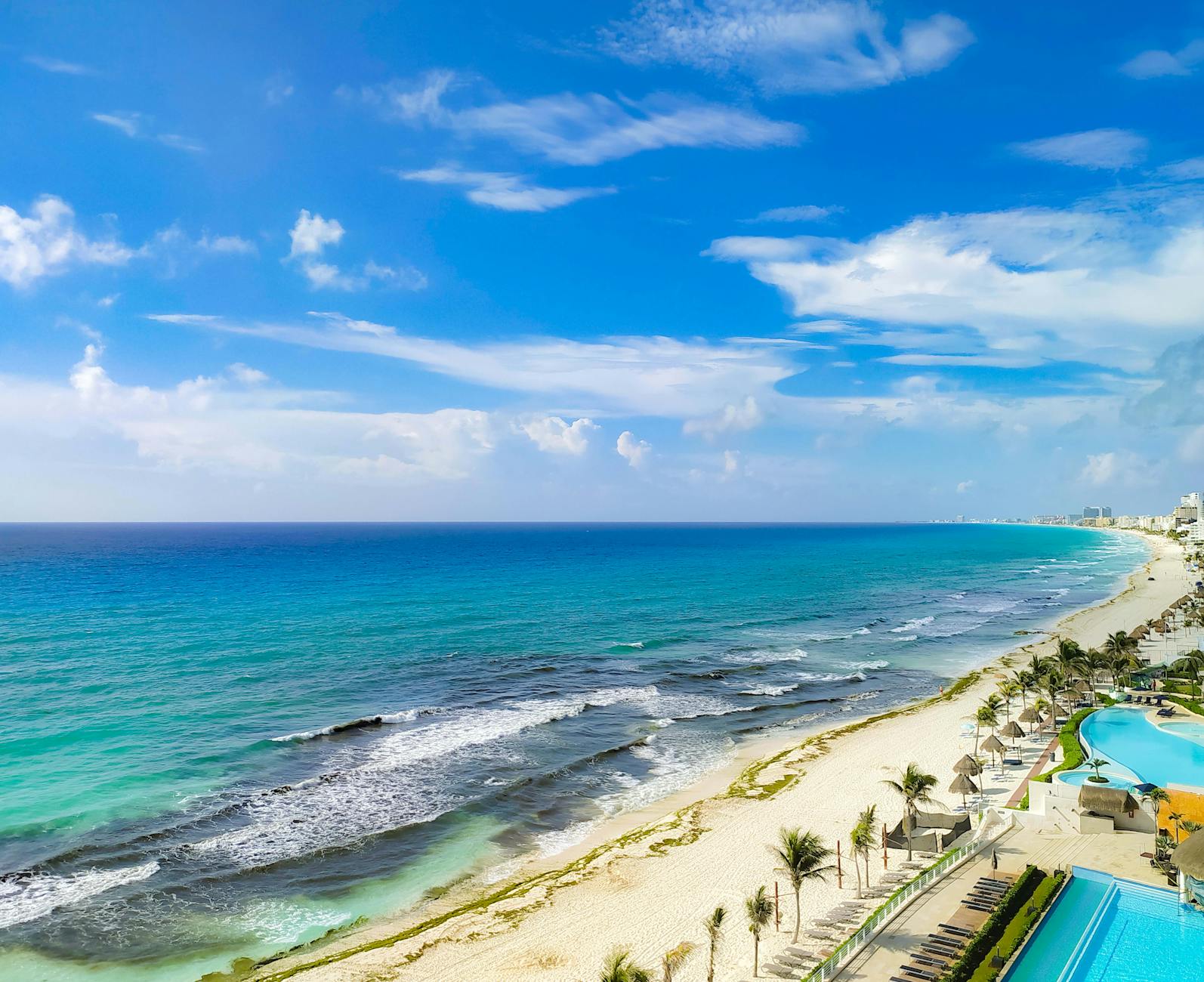
🔗 Recommended · AviasalesCancun is the hybrid destination. You can stay at an all-inclusive in the Hotel Zone or head downtown and experience a real city with taquerias, markets, and its own nightlife. Its massive air connectivity from Mexico and much of the United States keeps flight prices under downward pressure.
Punta Cana is all-inclusive in its purest form. The infrastructure is designed almost exclusively for closed resorts, and there's little to do outside without booking excursions. That simplifies the budget enormously: you pay once when you book, and everything else is minor details.
Cartagena breaks the mold. It doesn't compete on all-inclusive volume; instead, it's a colonial city declared a UNESCO World Heritage Site, with nearby beaches on the Rosario Islands and Baru. Here you build your own trip: boutique hotel, street food, restaurants, and your own pace. Spending can be very low if you know how to get around, or climb considerably if you choose luxury in the historic center.
That difference in model is what defines the rest of the calculation.
What Weighs Most in the Budget: Flight, Lodging, or Daily Spend
Understanding which category dominates in each destination tells you exactly where to cut back to save money.
In Cancun, if you're leaving from Mexico, the flight is usually the cheapest component: the route is saturated with competition. Lodging is where most of the money goes. There you decide between all-inclusive (high but predictable spend) or a downtown hotel plus meals and transportation on your own (more variable, but potentially cheaper).
In Punta Cana, the international flight weighs more, especially from Mexico. However, the Dominican all-inclusive model is highly optimized and competes hard in the mid-range segment. Once you've paid for the package, daily spend is easy to control.
In Cartagena, the flight from Colombia or neighboring countries is notably cheaper. What varies most is daily spend: you can eat and get around on a very tight budget in Colombian pesos, or spend like you would in any European city if you go for the gourmet circuit and luxury hotels.

The Three Cost Scenarios, With Full Math
Here's the heart of the analysis: three real profiles for a week (seven nights). These are calculation frameworks based on consistent seasonal patterns. You should update them with current prices from your own search.
Scenario 1: Traveler from Mexico (CDMX or Guadalajara)
Cancun has a structural advantage that's almost impossible to match: a domestic flight of under two hours, no passport needed for Mexicans, and dozens of daily flights with Volaris, Viva, and Aeromexico competing with each other. A round-trip ticket in high season can be found between 140 and 260 USD if you search ahead of time.
Punta Cana and Cartagena require an international flight with a layover in most cases. The ticket usually costs 45% to 75% more than to Cancun. That difference alone can cover several nights of lodging or several excursions.
For lodging, a four-star all-inclusive in Cancun runs around 280-420 USD per night for two people. A seven-night package in Punta Cana usually runs between 2,100 and 3,100 USD per person, all-inclusive. In Cartagena, a boutique hotel in the historic center plus meals and two island excursions typically comes out to between 1,450 and 2,300 USD total for two people, if you put it together well.
The math clearly favors Cancun for this profile.
Scenario 2: Traveler from the United States (East Coast, say Miami or New York)
Here the playing field levels out. Cancun and Punta Cana both have frequent direct flights with similar travel times (two to four hours). Cartagena almost always requires a connection, which puts it at a disadvantage in both time and price.
The decision then shifts to the lodging model. Punta Cana has a more consolidated all-inclusive offering, with major American chains (Hyatt, Marriott, Iberostar) and packages that tend to deliver better perceived value for those who want to fully unplug. Cancun offers more flexibility if you want to combine a resort with the city or head out to Tulum. Cartagena, on the other hand, attracts the traveler seeking culture over resort life.
Scenario 3: LATAM Traveler (say, Bogota, Lima, or Buenos Aires)
Cartagena becomes the clear favorite if you have a direct or short flight from Colombia. The most expensive component, the flight, drops drastically, and daily spend in Colombian pesos is competitive. From Bogota it's possible to put together a full week for less than an average all-inclusive package in Punta Cana costs.
From Lima or Buenos Aires, all three destinations require long flights. There, Cancun and Punta Cana compete for the traveler who prefers a closed package, while Cartagena keeps the edge in daily spend and richness of experience if you're willing to organize your own itinerary.
Structural Comparison: What to Check Before Booking
| Factor | Cancun | Punta Cana | Cartagena |
|---|---|---|---|
| Component that weighs most | Lodging (all-inclusive vs hotel+meals) | International flight | Variable daily spend |
| Best for traveler from | Mexico (domestic flight) | United States (abundant direct flights) | LATAM with direct flight (Colombia and neighbors) |
| Relative flight cost from CDMX | Low | High | Medium-High |
| Dominant model | Hybrid: resort or city | Almost exclusively all-inclusive | Boutique + own itinerary |
| Budget flexibility | High | Low | Very high |
| What to check before booking | Volaris/Viva vs Aeromexico rates + actual all-inclusive cost | Per-night price at 4-5 star resorts for your exact dates | Direct flights + boutique hotel prices and island tour costs |
This table is your real checklist. Winter prices spike especially close to Christmas, New Year's, and Easter week.
Transfers and Activities: The Expense People Underestimate
Most people only calculate flight and hotel. That mistake usually accounts for 15% to 25% of total spend, based on real Caribbean travel patterns.
In Cancun, the transfer from the airport to the Hotel Zone takes 25 to 35 minutes, and a shared shuttle tends to be the most reasonable option. Activities (Isla Mujeres, Chichen Itza, snorkeling) add up fast if you don't budget for them.
In Punta Cana, distances can be long, up to 90 minutes to some resorts in Uvero Alto or Cap Cana. That affects both arrival and any excursion outside the resort. Tours to Saona or Catalina are the most common extra expense.
In Cartagena, the airport is 15 minutes from the historic center, a major advantage. However, tours to the Rosario Islands or Baru can cost between 90 and 160 USD per person if booked through an operator. Doing it on your own significantly cuts that number down.
Always keep these categories separate in your spreadsheet. It's where most people get caught off guard.
Verdict: Which Destination Makes Sense for Your Profile
If you're leaving from Mexico and want the simplest trip, with the lowest risk and best value for money, Cancun wins with no real argument. The domestic flight, the lack of immigration paperwork, and the dual option of resort or city make it unbeatable for most budgets.
If you're leaving from the United States and want to arrive, unplug, and have everything taken care of, Punta Cana is the most consistent option. Its all-inclusive offering is more mature for that profile, and direct flights make everything easier.
If you're leaving from a LATAM country with good connections to Cartagena and you're more interested in cultural experience, local food, and building your own trip than a closed resort, Cartagena delivers the best balance between spend and richness of experience.
The golden rule is to choose based on your origin and real budget first, never pick the destination first and then force the flight to fit.
Before You Book
Use Skyscanner or Google Flights for flights, and compare directly on hotel and chain websites. This article gives you the decision-making framework: which model dominates in each place, which origin favors which destination, and which costs people tend to underestimate.
The final number you pay will depend on the exact week you choose. It can vary by 30% or more between the first and last week of December.
Ready to plan your trip? Talk to Osi on Telegram and we'll help you crunch the numbers for your route.
The best trip isn't the most expensive or the cheapest — it's the best reasoned.
This article uses structural cost patterns and lodging models consistently observed in the Caribbean through platforms like Skyscanner, Google Flights, Booking.com, and historical tourism industry seasonal data. Always verify current prices for your specific dates.