

Colombia sells you the "golden triangle" as if it were a magic formula: Bogotá, Medellín, Cartagena, done. What almost nobody tells you is that each of these cities represents a completely different Colombia in terms of climate, cost, and pace. The difference between planning the route with your head and jumping in without thinking is measured in hundreds of dollars lost and entire days you end up spending in airports or mountain buses.
Let me be transparent from the start: I don't have every exact price locked in for mid-2026, because they change constantly depending on season, demand, and exchange rate. What I can give you are real ranges based on verified trends from recent years projected into 2026, the concrete reasoning behind each decision, and the precise sources where you yourself can confirm the numbers before you buy. That's worth more than a pretty table full of figures that will stop being true in three months.
Why the golden triangle and not another route
🔗 Recommended · AviasalesBogotá gives you the Andean version: a capital at two thousand six hundred meters of altitude, world-class museums, and intense urban life. Medellín brings the eternal-spring climate and the country's best tourist infrastructure. Cartagena closes things out with the Caribbean, colonial walls, and a beach less than an hour away. Adding a day in the Rosario Islands gets you real ocean, not just a boardwalk.
The math for ten days is strict: you need a minimum of three full nights in each city for the internal travel to be worth it. If you move every two days, you end up spending more time in waiting rooms than walking the streets. With ten days you have room for three nights per destination plus one extra day for the islands or as a buffer against any surprises. Less than that, and you have to sacrifice an entire city or turn the trip into an exhausting marathon.
This route lets you see three radically different climates, three ways of speaking, and three ways of living. It's the most efficient introduction to the country if it's your first trip. Anyone looking for extreme depth in a single place should choose a different strategy, but if you want to sample three different Colombias in a single vacation, this combination is still the one that works best.
The Colombian peso and why your budget goes further in 2026
The Colombian peso has maintained a sustained devaluation against the dollar. That means your US dollars buy more local pesos than a few years ago: food, taxis, buses, and lodging in COP go further for anyone paying in dollars.
This doesn't mean Colombia is cheap, just that your budget has more purchasing power than in destinations with more stable currencies. The practical rule is simple: always pay in pesos, whether in cash or with a card without international fees, and avoid exchanging dollars at the airport. Better to do it at trusted exchange houses downtown or use ATMs at major banks with good rates.
If you're interested in buying emeralds or fourteen-karat gold pieces — a classic Colombian souvenir — check the updated international quote first. Local prices are usually competitive, but they fluctuate with the global market. Buying in tourist zones without comparing can make you pay up to forty percent more than necessary. Carry an updated exchange rate app and always negotiate in pesos.
Bogotá: the capital that needs more days than you give it
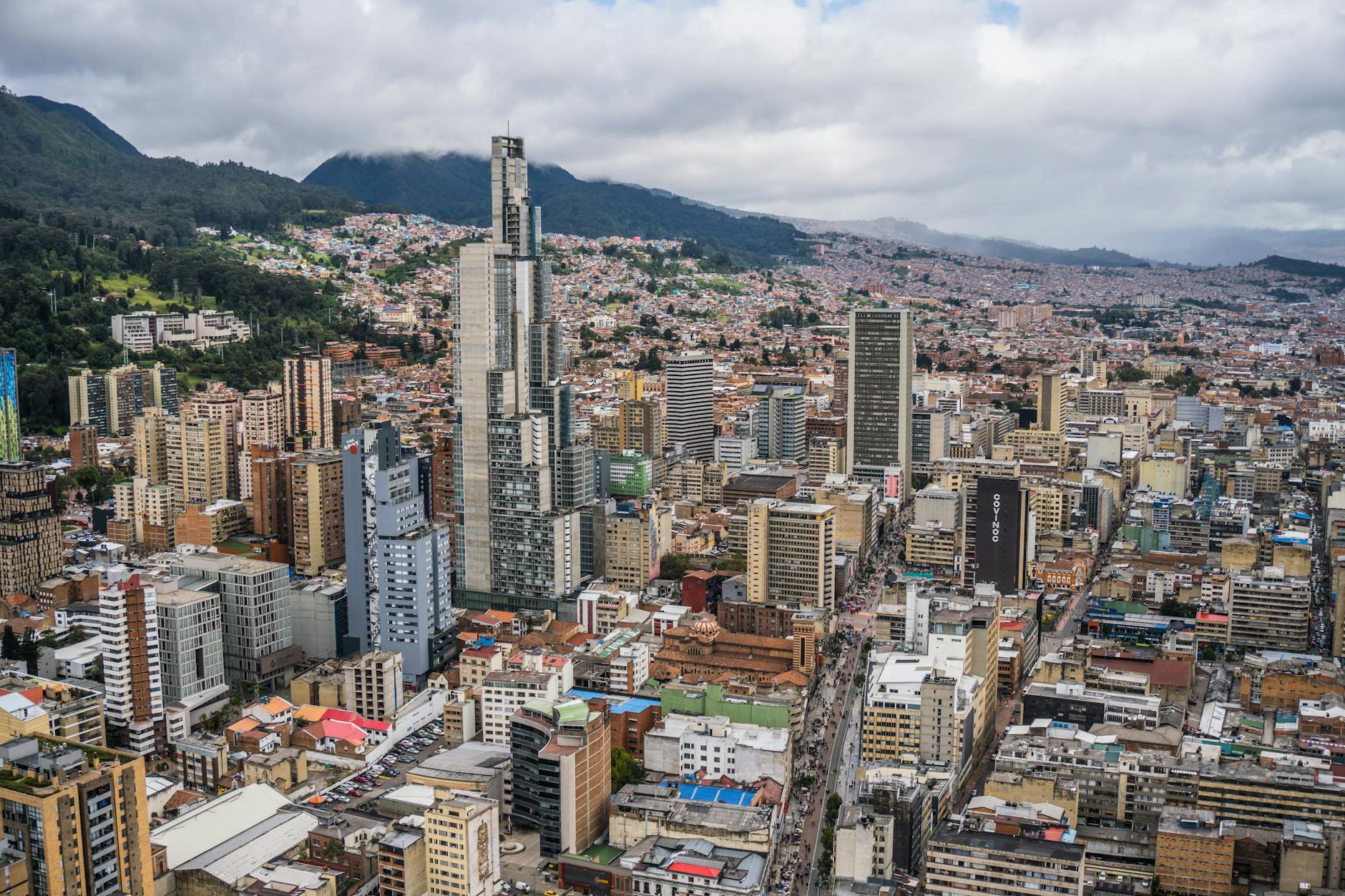
Bogotá is the most underrated of the three cities. With just two days, you leave with the feeling of having visited a big airport with museums next door. Three full nights let you properly do the Gold Museum, walk La Candelaria at a calm pace, go up to Monserrate, and dedicate a full day to Zipaquirá to see the Salt Cathedral, a little over an hour away.
Arrive at El Dorado airport and take an Uber or official taxi to La Candelaria or Chapinero (between 15 and 22 USD according to our estimates for 2026). The TransMilenio is cheaper, but complicated if you're traveling with big suitcases. Spend the first afternoon acclimating to the altitude: walk slowly, drink plenty of water, and try hot chocolate with cheese, a local classic.
The Gold Museum and the Botero Museum should be mandatory. Both have a good pace and can be covered in half a day each. Book the Zipaquirá tour in advance during high season, because the trains fill up. As for safety, Bogotá is a city of more than eight million people: it has areas that are very comfortable for tourists — Zona Rosa, Zona G, Usaquén — and others where you should be more careful at night, especially certain streets in La Candelaria. Apply the same criteria you'd use in any big Latin American capital: common sense, Uber at night, and avoid showing valuables unnecessarily.

Medellín: the city with the best tourist infrastructure
Medellín is the easiest of the three for travelers. Its constant spring-like climate, between eighteen and twenty-eight degrees, removes an important variable, and the integrated metro system lets you get around efficiently and cheaply.
The most important decision here is where to sleep. El Poblado is more touristy, with more restaurants, bars, and nightlife, but also more expensive. Laureles gives you a more local vibe, generally better prices, and excellent metro connections. If you're looking for value for money and want to feel more integrated into the city, Laureles almost always wins.
From Laureles you can reach downtown in twenty minutes and take the Metrocable up to Comuna 13. The guided tour through the escalators and graffiti usually lasts three and a half hours. Don't miss the Botanical Garden or Pueblito Paisa. You should confirm prices for the metro pass, the Comuna 13 free tour, or lodging rates close to your travel date on official websites. What doesn't change is that Medellín has transformed its safety perception: the main tourist areas are crowded with thousands of foreigners without issues during the day. At night, common sense still applies, and use ride-hailing apps.
Cartagena and the Rosario Islands: the Caribbean on a different budget
Cartagena completely changes the picture. The heat is more intense, prices in the walled city are inflated by tourism, and the city becomes the starting point for the Rosario Islands.
Where you stay makes a big difference to your budget. Inside the Historic Center you pay a premium for being steps from the walls. Getsemaní, just ten or fifteen minutes on foot, offers better value for money and a very pleasant bohemian vibe. Bocagrande is the option if you're after urban beach and resorts.
Tours to the Rosario Islands vary depending on the season, group size, and whether they include lunch or snorkeling. The smartest move is to compare prices directly at the dock the day before. Typical food — egg arepas, ceviche, coconut rice — is much cheaper away from the obvious tourist restaurants. A well-prepared dish at a Getsemaní spot can cost half of what you'd pay at Plaza de los Coches.
In terms of safety, the Historic Center and Bocagrande have a strong police and tourist presence. Getsemaní has improved notably, though it still calls for basic judgment at night. The islands, being organized tours, carry a lower risk profile. Bring strong sunscreen and drink fresh coconut water on the islands: it's the cheapest and most refreshing way to stay hydrated.
Domestic flight versus bus: the math I can actually show you with clear logic
Colombia is mountainous. Bogotá to Medellín is about four hundred kilometers in a straight line, but eight to ten hours by mountain road. Medellín to Cartagena easily exceeds twelve hours. On a trip of only ten days, spending twenty to twenty-four hours just on buses means giving away practically two full days of your itinerary.
That's why the right question isn't just how much the flight costs, but how much your time is worth. On a route of this length, flying internally is almost always the right call: the extra cost is offset by the days you gain in the cities.
Check fares on Avianca, Wingo, and Latam at least three weeks in advance with flexible dates. Prices can vary a lot depending on how far ahead you book and the season. A Bogotá-Medellín flight bought with time is usually between 45 and 85 USD. Medellín-Cartagena typically costs between 55 and 110 USD, according to our estimates for 2026.
Three budget scenarios by traveler profile
These ranges correspond to our estimates for 2026, based on cost-of-living trends, projected exchange rates, and real traveler patterns in these three cities. Lodging is the variable that moves the final bill the most.
| Profile | Estimated daily budget (USD) | Estimated daily budget (COP) | 10-day total (USD, approx.) |
|---|---|---|---|
| Backpacker | 40-55 | 170,000-230,000 | 400-550 |
| Standard | 80-115 | 340,000-480,000 | 800-1,150 |
| Premium | 170-290 | 720,000-1,200,000 | 1,700-2,900 |
The backpacker gets around with hostels, public transport or shared apps, meals at markets, and free or low-cost activities. The standard profile combines good three-star hotels or Airbnbs, a mix of local food with some tourist restaurants, and organized group tours. The premium traveler chooses boutique or chain hotels, signature restaurants, private tours, and probably an exclusive day on the islands.
These numbers include internal transport, meals, lodging, and attractions. They do not include the international arrival flight or significant souvenirs.
The verdict: when this route makes sense and when it doesn't
This ten-day route makes sense if your priority is sampling three very different Colombias in a single trip: Andean, modern urban, and Caribbean. You'll come away with a broad, but not deep, view of each place.
If your budget or your time is tight, sacrifice one city. Bogotá and Medellín give you strong contrast without the radical shift in climate and prices that the Caribbean involves. If the ocean is your number one priority, focus on Cartagena plus the islands and make just a short stop in Medellín or Bogotá.
In almost every case, domestic flights win on the math of time. And choosing the right neighborhood to stay in — Laureles versus El Poblado, Getsemaní versus the Historic Center — is the most powerful savings lever you have.
Talk to Osi on Telegram and we'll help you work out the numbers for YOUR route.
The best trip isn't the most expensive or the cheapest — it's the best reasoned.
Sources
- Price trends and 2026 projections: Booking.com, Airbnb, Numbeo, and historical data from the Colombian Ministry of Commerce (2023-2025)
- Air transport and fares: official Avianca, LATAM, and Wingo websites (checked in 2025)
- Attractions and hours: Gold Museum, Zipaquirá Salt Cathedral, Medellín and Cartagena city halls
- Neighborhood and safety analysis: updated reports from Lonely Planet, verified traveler groups, and data from Colombia's Ministry of Tourism